1/2
1/2

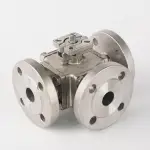
2PC Flanged Ball Valve with ISO Direct Mounting Pad ANSI150LB
Categories: Other Valves
Exhibitor Information

ONE-VALVE TIME TECHNOLOGY CO.,LTD.
2PC ANSI Flanged Ball Valv
The 2PC (Two-Piece) Flanged Ball Valve is a widely used valve in industries such as petroleum, chemical, and power generation. It complies with American standards (ANSI/ASME) and is suitable for high-pressure and high-temperature applications.
**1. Basic Structure**
- **Two-Piece Body Construction:** The valve body consists of two parts joined by bolts, facilitating easy disassembly and maintenance.
- **Flanged Connection:** Conforms to ANSI B16.5 or ASME B16.47 standards. Available flange face types include RF (Raised Face), FF (Flat Face), and RTJ (Ring-Type Joint).
- **Ball:** Made of stainless steel (304/316) or carbon steel, with the surface optionally hardened (e.g., hard chrome plating) to improve wear resistance.
- Seat Sealing: Commonly uses PTFE (Polytetrafluoroethylene), PPL (Reinforced Polypropylene), or metal seals for high-temperature and high-pressure conditions.
2. Working Principle
- Opening:The handle or actuator rotates the stem by 90°, aligning the ball's bore with the pipeline to allow media flow.
- Closing: The ball rotates 90°, positioning the bore perpendicular to the pipeline, thereby shutting off the media flow.
3. Key Features
- High-Pressure Capability: Complies with ANSI Class 150 to 600 (or higher), suitable for various pressure ratings.
- High-Temperature Resistance:Metal-seated ball valves can withstand temperatures ranging from -196°C to 550°C (depending on materials).
- Low Flow Resistance:Full-port (full-bore) design minimizes pressure drop.
- Bidirectional Sealing: Capable of withstanding media pressure from either direction.
- Long Service Life:Blowout-proof stem design reduces leakage risks.
The 2PC (Two-Piece) Flanged Ball Valve is a widely used valve in industries such as petroleum, chemical, and power generation. It complies with American standards (ANSI/ASME) and is suitable for high-pressure and high-temperature applications.
**1. Basic Structure**
- **Two-Piece Body Construction:** The valve body consists of two parts joined by bolts, facilitating easy disassembly and maintenance.
- **Flanged Connection:** Conforms to ANSI B16.5 or ASME B16.47 standards. Available flange face types include RF (Raised Face), FF (Flat Face), and RTJ (Ring-Type Joint).
- **Ball:** Made of stainless steel (304/316) or carbon steel, with the surface optionally hardened (e.g., hard chrome plating) to improve wear resistance.
- Seat Sealing: Commonly uses PTFE (Polytetrafluoroethylene), PPL (Reinforced Polypropylene), or metal seals for high-temperature and high-pressure conditions.
2. Working Principle
- Opening:The handle or actuator rotates the stem by 90°, aligning the ball's bore with the pipeline to allow media flow.
- Closing: The ball rotates 90°, positioning the bore perpendicular to the pipeline, thereby shutting off the media flow.
3. Key Features
- High-Pressure Capability: Complies with ANSI Class 150 to 600 (or higher), suitable for various pressure ratings.
- High-Temperature Resistance:Metal-seated ball valves can withstand temperatures ranging from -196°C to 550°C (depending on materials).
- Low Flow Resistance:Full-port (full-bore) design minimizes pressure drop.
- Bidirectional Sealing: Capable of withstanding media pressure from either direction.
- Long Service Life:Blowout-proof stem design reduces leakage risks.
Other Products (9)