1/2
1/2

Bottom Valve (Tank Bottom Valve) PN16-40
Categories: Functional Valve & Others
Exhibitor Information

ONE-VALVE TIME TECHNOLOGY CO.,LTD.
Bottom Valve (Tank Bottom Valve) PN16-40
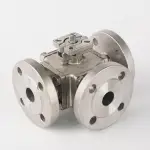
The bottom valve, also known as a tank bottom valve or discharge valve, is a specialized valve installed at the bottom of reactors, storage tanks, and similar vessels. Its primary function is to ensure complete and thorough draining of the vessel contents. Connected via welding or flanged joints at the bottom of the tank, it effectively eliminates media residue at the outlet, achieving "dead-leg-free" discharge.
Structurally, the bottom valve consists of a valve body, plug/disc, stem, and sealing components. It operates by linear motion of the stem to open or close the valve. Common types include the rising-stem (stem rises to open) and non-rising-stem (stem rises to close) configurations. The valve body is typically made of stainless steel; in highly corrosive applications, special materials such as titanium alloys are used.
Today, in addition to manual operation, bottom valves are widely equipped with pneumatic or electric actuators, enabling remote automated control and critical process interlocking. These valves are extensively used in the discharge sections of reactors across the chemical, petrochemical, pharmaceutical, and food industries.
The bottom valve, also known as a tank bottom valve or discharge valve, is a specialized valve installed at the bottom of reactors, storage tanks, and similar vessels. Its primary function is to ensure complete and thorough draining of the vessel contents. Connected via welding or flanged joints at the bottom of the tank, it effectively eliminates media residue at the outlet, achieving "dead-leg-free" discharge.
Structurally, the bottom valve consists of a valve body, plug/disc, stem, and sealing components. It operates by linear motion of the stem to open or close the valve. Common types include the rising-stem (stem rises to open) and non-rising-stem (stem rises to close) configurations. The valve body is typically made of stainless steel; in highly corrosive applications, special materials such as titanium alloys are used.
Today, in addition to manual operation, bottom valves are widely equipped with pneumatic or electric actuators, enabling remote automated control and critical process interlocking. These valves are extensively used in the discharge sections of reactors across the chemical, petrochemical, pharmaceutical, and food industries.
Other Products (9)